Connect Data. Simplify Operations. Scale Faster.
Integration debt is quiet until it is expensive. Point-to-point connections multiply, nobody owns them, and every new system takes longer than the last. Our data integration services replace that with governed, reusable connectivity across your estate.
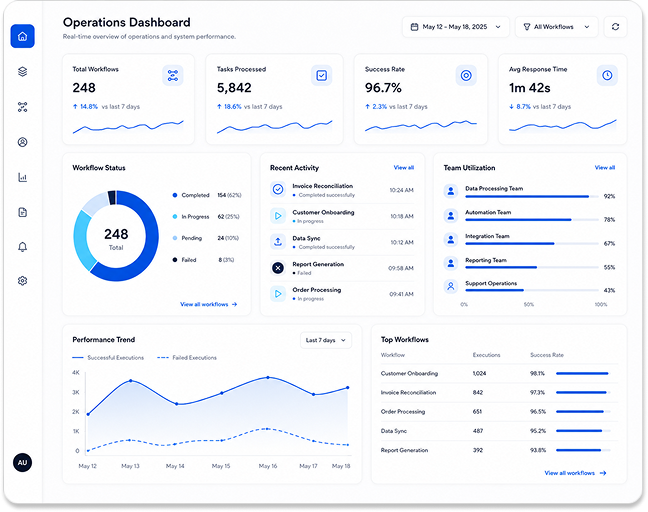
Our Data Integration Services for Modern Enterprises
Our enterprise data integration services span application, cloud, API and legacy connectivity, designed as reusable patterns rather than one-off connections.

Enterprise Application Integration
SAP, Salesforce and operational systems connected with clear system-of-record ownership.

Cloud Data Integration
Cloud platforms and services integrated with existing on-premise estates.

API & System Integration
Governed, documented APIs replacing bespoke connection code between systems.

Real-Time Data Integration
Streaming and event-driven flows where latency affects the decision.

Database Integration
Operational and analytical stores connected with consistent definitions.

Legacy System Integration
Older systems connected without waiting for them to be replaced.

Data Integration Capabilities Across Platforms and Systems
Our data integration consultants select the pattern that fits the workload, since the wrong one costs far more to run than to build.
Data Synchronisation
Consistent records across systems, with conflict and ordering rules defined.
Hybrid Data Integration
Cloud and on-premise systems connected under one governance model.
Streaming & Event Integration
Continuous flows for operational data where freshness matters.
Multi-Cloud Integration
Connectivity across cloud providers without duplicating logic.
Batch Data Integration
Scheduled movement at volume with validation and recovery designed in.
API-Based Integration
Reusable services consumed by applications, partners and agents alike.
Data Integration Use Cases for Modern Enterprise Needs
Our data integration solutions are shaped by what the connection needs to achieve.

Business Benefits of Our
Data Integration Solutions
We baseline current data flow and effort first, so improvement is measured rather than described.
Faster Data Availability
Data reaches the systems that need it without manual intervention.
Reduced Data Silos
Fewer isolated stores holding versions nobody else can see.
Improved Data Consistency
The same record means the same thing in every system.
Greater Operational Efficiency
Less manual reconciliation, re-keying and exception handling.
Scalable Connectivity
New systems added to existing patterns rather than built from scratch.
Faster Analytics & AI Readiness
Initiatives that proceed instead of stalling on data access.
Why Choose KloudData as Your
Data Integration Partner
Integration is where enterprise programmes usually slip. As a data integration company with delivery experience across SAP, Salesforce and cloud estates, we design connectivity that holds as systems change.


Latest Data Integration Insights
Frequently Asked Questions
What Does a Data Integration Consultant Do?
How Is Enterprise Data Integration Different From ETL?
Can You Integrate Cloud and On-Premise Systems?
How Do You Handle Real-Time Data Integration?
How Long Does a Data Integration Project Take?
Looking to Build Scalable Data Connectivity?
Replace point-to-point connections with governed, reusable integration across your estate.
Discuss Your Data Integration Strategy